
- “Beclate Rotacaps 400 Mcg (Beclomethasone)” already exists in your wishlist
Theo Asthalin Tablet (Salbutamol & Theophylline)
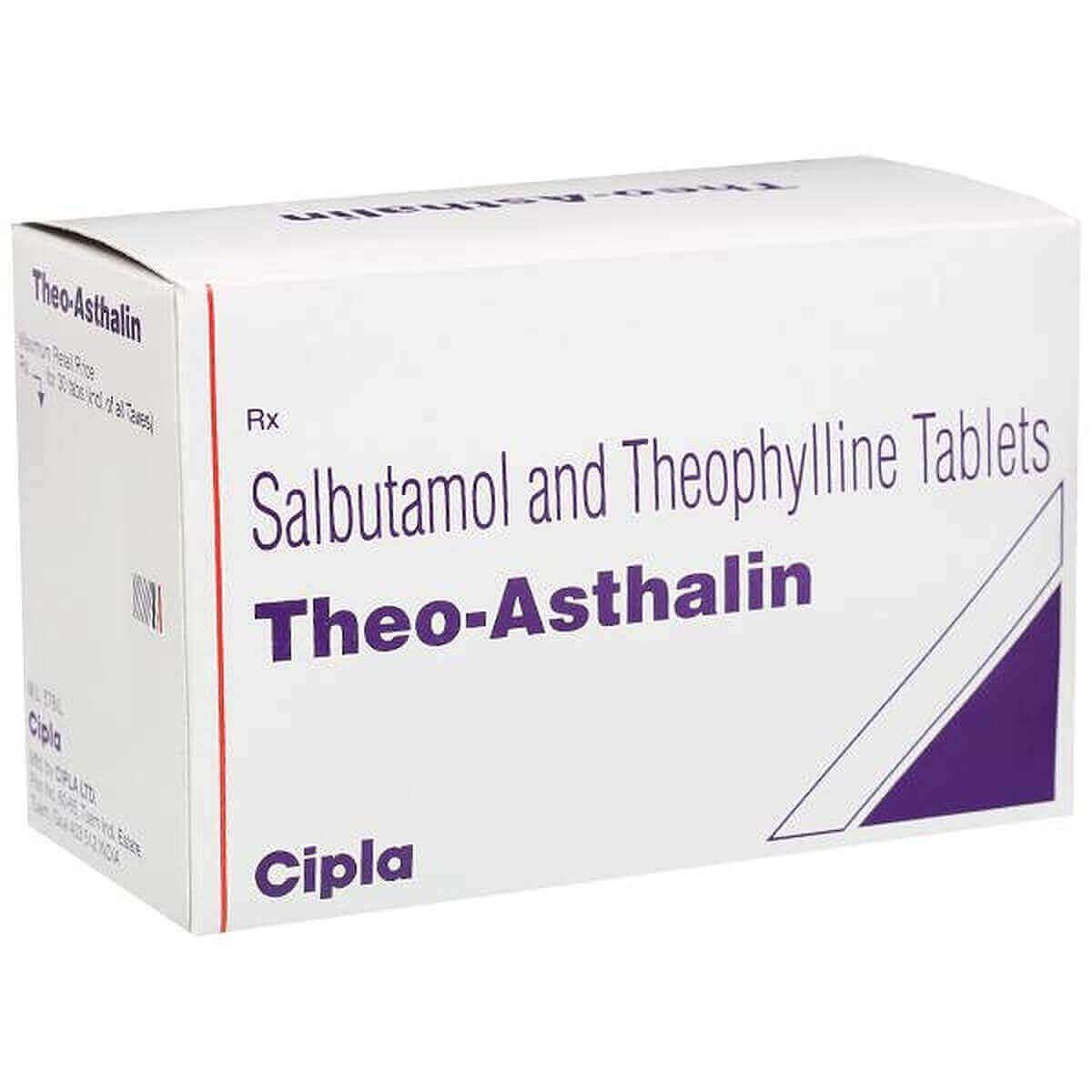
Price range: $6.48 through $19.50
| Active Ingredient | Salbutamol/Theophylline |
|---|---|
| Manufacturer | Cipla Limited |
| Packaging | 10 tablets in 1 strip |
| Strength | 2mg+100mg |
| Delivery Time | 6 To 15 days |
| SKU: | Theo Asthalin Tablet (Salbutamol/Theophylline) |
Theo Asthalin Tablet – Trusted Dual-Action Bronchodilator Therapy for Asthma & COPD Online
For patients whose asthma or chronic obstructive pulmonary disease requires more than a single bronchodilator mechanism to achieve consistent, comfortable breathing control, combination oral bronchodilator therapy offers a clinically proven and practically convenient treatment approach. Theo Asthalin Tablet delivers exactly that — combining two well-established, pharmacologically distinct bronchodilator medications in a single oral tablet that targets airway narrowing through two completely separate pathways simultaneously, providing broader, more sustained respiratory relief than either component could achieve independently.
Manufactured by Cipla — one of India’s most trusted and globally recognised pharmaceutical companies — Theo Asthalin Tablet brings together the complementary bronchodilating actions of theophylline and salbutamol in a convenient oral format that has been trusted by respiratory patients and prescribed by clinicians across India for many years. At our online pharmacy, we stock genuine Theo Asthalin Tablet products, giving patients convenient, affordable, and discreet access to this established dual-action oral bronchodilator therapy.
What Is Theo Asthalin Tablet?
Theo Asthalin Tablet is a fixed-dose combination oral bronchodilator tablet containing two active ingredients — theophylline and salbutamol sulphate — in a single tablet formulation designed for oral administration.
The combination brings together two bronchodilators from entirely different pharmacological classes — a xanthine derivative and a beta-2 adrenergic agonist — whose complementary mechanisms of action produce additive bronchodilating effects that address airway narrowing more comprehensively than either agent alone.
Theo Asthalin is available in standard tablet strength, with theophylline providing the sustained bronchodilator and anti-inflammatory backbone of the combination while salbutamol contributes additional beta-2 mediated airway relaxation. This dual-mechanism oral approach makes Theo Asthalin particularly valuable for patients who require systemic bronchodilator therapy — either as an alternative to inhaler-based treatment or as a complementary addition to existing inhaler regimens under medical guidance.
How Theo Asthalin Tablet Works — The Dual Mechanism?
The clinical effectiveness of Theo Asthalin Tablet derives from the pharmacologically additive interaction between its two active components — each working through a completely independent bronchodilating pathway.
Theophylline — Xanthine Bronchodilator and Anti-inflammatory Agent
Theophylline is a naturally occurring methylxanthine compound closely related to caffeine, with a well-established history in respiratory medicine spanning more than eight decades. Its bronchodilating mechanism is multifaceted and distinct from all other bronchodilator classes.
Theophylline works primarily by non-selectively inhibiting phosphodiesterase enzymes — particularly PDE3 and PDE4 — within airway smooth muscle cells and inflammatory cells. This enzyme inhibition prevents the breakdown of cyclic AMP and cyclic GMP within these cells, allowing intracellular levels of these second messenger molecules to accumulate. Elevated cyclic AMP and cGMP levels trigger smooth muscle relaxation throughout the bronchial tree — widening constricted airways and improving airflow.
Beyond its bronchodilating action, theophylline also demonstrates meaningful anti-inflammatory properties at therapeutic concentrations — inhibiting inflammatory mediator release, reducing eosinophil activity, and stimulating histone deacetylase activity that suppresses inflammatory gene expression. This anti-inflammatory dimension adds a further layer of therapeutic value beyond pure bronchodilation.
Additionally, theophylline stimulates respiratory drive — increasing the sensitivity of the respiratory centre to carbon dioxide stimulation and strengthening diaphragmatic contractility. These effects are particularly beneficial in COPD patients with respiratory muscle fatigue and blunted respiratory drive.
Salbutamol — Beta-2 Adrenergic Bronchodilator
Salbutamol is a highly selective short-acting beta-2 adrenergic agonist — the same active bronchodilator found in widely used rescue inhalers — delivered orally in Theo Asthalin to provide complementary beta-2 receptor mediated bronchodilation alongside theophylline’s xanthine-based mechanism.
Oral salbutamol binds to beta-2 adrenergic receptors in airway smooth muscle, activating adenylyl cyclase and increasing intracellular cyclic AMP levels — triggering rapid smooth muscle relaxation and bronchial widening. Working through a fundamentally different molecular pathway than theophylline’s phosphodiesterase inhibition, salbutamol’s beta-2 agonism adds a genuinely complementary and additive bronchodilating effect that enhances the overall therapeutic response beyond what theophylline achieves alone.
Together, these two mechanisms deliver broader, more comprehensive airway relaxation — addressing bronchoconstriction simultaneously through the xanthine and beta-adrenergic pathways for superior combined bronchodilation.
Conditions Treated with Theo Asthalin Tablet
Theo Asthalin Tablet is prescribed across a range of obstructive airway conditions where dual-mechanism oral bronchodilator therapy provides meaningful clinical benefit:
- Bronchial Asthma — Provides sustained dual-mechanism bronchodilation for patients with persistent asthma symptoms requiring oral bronchodilator support — particularly valuable for patients who struggle with inhaler technique or adherence
- Chronic Obstructive Pulmonary Disease (COPD) — Delivers complementary xanthine and beta-2 bronchodilation for COPD patients experiencing persistent breathlessness and airflow limitation
- Chronic Bronchitis — The combination of bronchodilation, anti-inflammatory action, and mucociliary stimulation from theophylline makes Theo Asthalin particularly useful in chronic bronchitis management
- Emphysema — Theophylline’s respiratory stimulant properties and diaphragmatic strengthening effects provide additional benefit beyond pure bronchodilation for emphysema patients
- Nocturnal Asthma — Sustained-release theophylline formulations provide prolonged overnight bronchodilation — reducing the night-time coughing, early morning wheeze, and sleep disruption characteristic of nocturnal asthma
- Bronchospasm — Effective management of recurrent bronchospasm episodes where additional systemic oral bronchodilator support complements existing inhaler therapy
- Reversible Airway Obstruction — For patients with documented reversible bronchoconstriction requiring broader dual-mechanism bronchodilator coverage than single-agent therapy provides
Theo Asthalin Tablet vs Other Oral Bronchodilator Options
| Feature | Theo Asthalin Tablet | Theophylline Alone | Salbutamol Tablet Alone | Aminophylline Tablet |
|---|---|---|---|---|
| Active components | Theophylline + Salbutamol | Theophylline only | Salbutamol only | Aminophylline only |
| Bronchodilator pathways | ✅ Dual — xanthine + beta-2 | Single — xanthine | Single — beta-2 | Single — xanthine |
| Anti-inflammatory action | ✅ Yes — theophylline | ✅ Yes | ❌ No | ✅ Yes |
| Respiratory stimulation | ✅ Yes — theophylline | ✅ Yes | ❌ No | ✅ Yes |
| Diaphragm strengthening | ✅ Yes — theophylline | ✅ Yes | ❌ No | ✅ Yes |
| Narrow therapeutic index | ⚠️ Theophylline component | ⚠️ Yes | ❌ No | ⚠️ Yes |
| Requires blood level monitoring | ⚠️ At higher doses | ⚠️ Yes | ❌ No | ⚠️ Yes |
| Suitable for nocturnal asthma | ✅ Yes | ✅ Yes | ⚠️ Limited | ✅ Yes |
| Manufacturer | Cipla | Various | Various | Various |
Benefits of Theo Asthalin Tablet:-
- Genuine dual-mechanism bronchodilation — Two completely independent bronchodilating pathways working simultaneously produce additive airway relaxation superior to single-agent oral bronchodilator therapy
- Theophylline’s additional therapeutic dimensions — Beyond bronchodilation, theophylline’s anti-inflammatory properties, respiratory drive stimulation, and diaphragmatic strengthening add therapeutic value unavailable from beta-2 agonists alone
- Oral convenience and accessibility — Simple tablet administration requires no inhaler technique, device training, or coordination — making effective bronchodilator therapy accessible for patients who struggle with inhaled devices
- Nocturnal asthma management — Theophylline’s sustained bronchodilating action provides extended overnight airway protection that significantly benefits patients with night-time asthma symptoms
- Established safety and efficacy profile — Both theophylline and salbutamol have decades of widespread clinical use with extensively studied and well-understood pharmacological profiles
- Complementary to inhaled therapy — Theo Asthalin can be used alongside existing inhaled respiratory medications to provide additional systemic bronchodilator coverage under medical guidance
- Cipla quality manufacturing — Consistent pharmaceutical standards ensuring reliable potency, dose accuracy, and product quality with every tablet
- Cost-effective treatment option — Affordable and accessible pricing supports consistent long-term treatment adherence without financial burden
Important Usage and Safety Information:-
Theophylline Has a Narrow Therapeutic Index — This is the most critical safety consideration with Theo Asthalin Tablet. Theophylline produces therapeutic effects within a relatively narrow concentration range — below which it is ineffective, and above which toxicity risk increases significantly. Symptoms of theophylline toxicity include nausea, vomiting, headache, palpitations, tremor, insomnia, and in severe cases seizures and cardiac arrhythmias. Always take exactly the prescribed dose — never exceed it.
Take at Regular Intervals as Prescribed — Consistent dosing at regular intervals maintains stable theophylline blood levels within the therapeutic range. Irregular dosing creates fluctuations in blood concentration that reduce efficacy or increase toxicity risk.
Numerous Drug Interactions Require Attention — Theophylline interacts with a significant number of commonly used medications — including antibiotics such as ciprofloxacin and erythromycin, antifungals, certain heart medications, cimetidine, and others — that can raise theophylline blood levels and increase toxicity risk. Always inform your doctor and pharmacist of all medications you are taking before starting Theo Asthalin.
Caffeine Consumption Should Be Moderated — Caffeine is a closely related methylxanthine that shares pharmacological mechanisms with theophylline. High caffeine consumption — from coffee, tea, energy drinks, or cola — can increase theophylline-like side effects. Moderate caffeine intake during Theo Asthalin therapy.
Smoking Significantly Affects Theophylline Levels — Cigarette smoking substantially increases theophylline metabolism — meaning smokers typically require higher doses to achieve therapeutic blood levels than non-smokers. If you start or stop smoking during Theo Asthalin therapy, inform your doctor immediately as dose adjustment will likely be necessary.
Take with Food to Reduce Gastric Irritation — Both theophylline and oral salbutamol can cause gastric discomfort. Taking Theo Asthalin Tablet with food reduces nausea and gastrointestinal irritation — particularly important at higher doses or during initial treatment.
Do Not Crush or Chew Sustained-Release Formulations — If Theo Asthalin is prescribed in a sustained-release format, swallow tablets whole — never crush, break, or chew them. Disrupting the sustained-release matrix causes rapid drug release and dramatically increases toxicity risk.
Complete Asthma Care Guide:- Asthma Inhalers: Types, Uses, Benefits & Complete Treatment Guide.
Potential Side Effects to Be Aware Of?
Common Side Effects:
- Nausea, vomiting, and gastric discomfort — particularly at higher doses or on an empty stomach
- Headache and dizziness — especially during initial treatment
- Insomnia and sleep disturbance — due to both theophylline’s CNS stimulant effects and salbutamol’s adrenergic activity
- Tremor and shakiness — primarily from the salbutamol component’s beta-adrenergic activity
- Palpitations and increased heart rate — from both components
Signs of Theophylline Toxicity — Seek Immediate Medical Attention:
- Persistent vomiting
- Severe headache
- Rapid or irregular heartbeat
- Muscle twitching or tremors
- Confusion or restlessness
- Seizures — a medical emergency requiring immediate intervention
How to Take Theo Asthalin Tablet?
- Follow your prescriber’s instructions exactly — dose, frequency, and timing are individually determined based on your condition, age, weight, and other medications
- Take with food or milk — to reduce gastric irritation and nausea
- Swallow whole — never crush, break, or chew tablets — particularly sustained-release formulations
- Take at consistent times daily — maintaining regular dosing intervals keeps theophylline blood levels stable within the therapeutic range
- Never double dose — if a dose is missed, skip it and continue with the next scheduled dose rather than taking a double dose to compensate
- Inform your doctor of all medications — before starting Theo Asthalin to identify and manage potential drug interactions
Frequently Asked Questions?
What is Theo Asthalin Tablet used for?
Theo Asthalin Tablet is a dual-action oral bronchodilator containing theophylline and salbutamol, prescribed for asthma, COPD, chronic bronchitis, emphysema, and related obstructive airway conditions requiring systemic bronchodilator therapy.
How does Theo Asthalin differ from a standard salbutamol inhaler?
Theo Asthalin is an oral tablet combining two bronchodilators — theophylline and salbutamol — working through two independent mechanisms. A salbutamol inhaler delivers only salbutamol locally into the airways. Theo Asthalin provides systemic dual-mechanism bronchodilation — complementing rather than replacing inhaled therapy.
Can Theo Asthalin be taken with other inhalers?
Yes — Theo Asthalin is frequently prescribed alongside existing inhaled medications. Always inform your doctor of all respiratory medications you are taking to ensure safe, coordinated dual therapy management.
Does theophylline in Theo Asthalin require blood level monitoring?
At higher doses or during long-term therapy, periodic theophylline blood level monitoring may be recommended by your doctor to ensure levels remain within the therapeutic range. Always follow your prescriber’s monitoring recommendations.
Can Theo Asthalin Tablet be used for children?
Theo Asthalin may be prescribed for children under careful medical supervision with appropriate dose adjustment for age and weight. Always follow your paediatrician’s specific instructions regarding dosing and monitoring.
What should I do if I experience palpitations after taking Theo Asthalin?
Mild palpitations can occur — particularly from the salbutamol component. If palpitations are severe, persistent, or accompanied by chest pain, dizziness, or irregular heartbeat, seek medical attention immediately.
How long does Theo Asthalin take to work?
Oral salbutamol typically begins working within thirty minutes of ingestion. Theophylline reaches therapeutic concentrations within one to two hours of dosing, providing sustained bronchodilation throughout the dosing interval.
Medical Disclaimer:-
The information provided on this page is for general informational purposes only and does not constitute medical advice, a clinical diagnosis, or a personalised treatment recommendation. Theo Asthalin Tablet is a prescription medication and must always be used under the direct guidance and supervision of a qualified healthcare professional. Theophylline has a narrow therapeutic index and significant drug interaction potential requiring careful medical management. If you experience symptoms of theophylline toxicity, unexpected side effects, or worsening respiratory symptoms while taking Theo Asthalin, please seek medical attention promptly. Never adjust, discontinue, or substitute your prescribed oral bronchodilator therapy without first obtaining appropriate professional medical advice.
Other Medications:-
Additional information
| unit | 300 Tablet, 90 Tablet, 120 Tablet, 150 Tablet |
|---|


Reviews
There are no reviews yet.