
Inhaler Types – Understanding Your Respiratory Treatment Options Online
Introduction:-
With so many different inhaler devices and medication categories available, navigating the world of respiratory treatment can feel overwhelming — particularly for newly diagnosed patients or those whose treatment plan is being stepped up. Understanding the different types of inhalers available, how each one works, and what role it plays in your overall respiratory care is fundamental to getting the most from your prescribed treatment.
At our online pharmacy, we stock a comprehensive range of inhaler types across every major device format and medication category — giving patients the knowledge and access they need to manage their respiratory health with confidence, clarity, and control.
Why Inhaler Type Matters?
Choosing the right inhaler type is not simply a matter of personal preference — it directly impacts how much medication actually reaches the lungs and how effectively symptoms are controlled. The best inhaler is always the one that delivers the right medication, in the right dose, using a device the patient can operate correctly and consistently every single time.
Factors that influence inhaler type selection include the patient’s age and physical dexterity, their ability to coordinate inhalation with device actuation, the speed and force of their inhalation, their prescribed medication, and their personal lifestyle and preferences. A prescriber or pharmacist will always consider these factors carefully when recommending a specific inhaler device.
Main Categories of Inhalers by Medication Type:-
Before considering device format, it helps to understand the four primary medication categories that inhalers deliver:
Reliever Inhalers (SABAs) — Short-acting bronchodilators such as salbutamol and levosalbutamol provide rapid airway relief during acute asthma episodes or sudden breathlessness. These are fast-acting rescue medications that every asthma patient should carry at all times for emergency use.
Preventer Inhalers (ICS) — Inhaled corticosteroids such as fluticasone, budesonide, and beclomethasone address chronic airway inflammation — the root cause of asthma. Taken daily as prescribed, preventer inhalers gradually reduce airway sensitivity and significantly decrease the frequency of asthma attacks over time.
Long-Acting Bronchodilators (LABAs & LAMAs) — Medications such as salmeterol, formoterol, and glycopyrrolate provide sustained airway relaxation lasting twelve to twenty-four hours. Used as maintenance therapy, these inhalers keep airways consistently open throughout the day and night.
Combination Inhalers (ICS + LABA) — Products such as Seretide, Foracort, and Symbicort combine a corticosteroid preventer with a long-acting bronchodilator in a single device — simplifying treatment regimens and delivering comprehensive dual-action respiratory control conveniently.
Continue Exploring… Asthma Inhalers: Types, Uses, Benefits & Complete Treatment Guide.
Main Types of Inhaler Devices:-
Understanding device formats helps patients use their inhalers correctly and consistently:
Pressurised Metered-Dose Inhaler (pMDI) — The most widely recognised inhaler format worldwide — a small aerosol canister housed in a plastic actuator that delivers a precisely measured dose of medication with each press. Requires coordination between pressing the canister and inhaling simultaneously. Compatible with spacer devices to improve drug delivery efficiency, particularly for children and patients with poor coordination.
Breath-Activated Inhaler (BAI) — An evolution of the standard pMDI that automatically releases medication when the patient inhales — removing the coordination requirement entirely. Particularly suitable for elderly patients, children, and those who struggle with the press-and-breathe technique of conventional pMDIs.
Dry Powder Inhaler (DPI) — A propellant-free device that delivers medication as a fine dry powder, activated by the patient’s own inhalation force. Requires a reasonably fast, deep breath to disperse the powder effectively. Available in various formats, including Accuhalers, Turbuhalers, Handihaler devices, and Rotahalers. Generally not recommended for very young children or patients with severely compromised inspiratory flow.
Spacer Devices — Not an inhaler in themselves, spacers are valved holding chambers that attach to pMDI inhalers to improve medication delivery significantly. By holding the aerosol cloud in suspension momentarily, spacers allow patients to inhale at their own pace without precise coordination — dramatically increasing the proportion of medication that reaches the lower airways rather than depositing in the mouth and throat.
Nebuliser Solutions — Liquid medication formulations converted into a fine inhalable mist by an electronic or compressor-driven nebuliser machine. Nebulisers require no active inhalation technique, making them ideal for very young children, infants, elderly patients, and those experiencing severe acute respiratory episodes. Commonly used in both clinical and home settings for higher-dose medication delivery.
Soft Mist Inhalers (SMI) — A newer generation of inhaler device that produces a slow-moving, fine aerosol mist from liquid medication — requiring less inhalation force than DPIs and offering improved lung deposition compared to conventional pMDIs. Particularly beneficial for elderly COPD patients or those with reduced inspiratory capacity.
Choosing the Right Inhaler Device:-
Selecting the most appropriate inhaler device depends on several individual patient factors:
- Age — Infants and toddlers require pMDI with a spacer and face mask; older children and adults have broader device options available
- Inspiratory Capacity — Patients with severely reduced lung function may struggle with DPIs requiring a strong inhalation force — pMDIs, BAIs, or nebulisers may be more appropriate
- Hand Dexterity — Patients with arthritis or limited hand strength may find breath-activated or soft mist devices easier to operate reliably
- Coordination Ability — Those unable to coordinate pressing and inhaling simultaneously benefit significantly from breath-activated devices or spacer-assisted pMDIs
- Lifestyle Considerations — Portable compact devices suit active patients; nebulisers are better suited to home-based treatment
Always consult your prescriber or pharmacist when selecting or switching inhaler devices — correct technique with your chosen device is essential for effective treatment.
Why Buy from Our Online Pharmacy?
- ✅ Full range of inhaler types across all device formats and medication categories
- ✅ Genuine, licensed medications from reputable manufacturers
- ✅ Spacer devices and face masks available alongside inhaler products
- ✅ Affordable and fully transparent pricing with no hidden charges
- ✅ Discreet plain packaging worldwide home delivery
- ✅ Secure, encrypted online ordering available around the clock
- ✅ Expert pharmacy support team available for inhaler type guidance
- ✅ Reliable international shipping for consistent medication access
Medical Disclaimer:-
The information provided on this page is for general informational purposes only and does not constitute medical advice, a clinical diagnosis, or a personalised device or treatment recommendation. All inhaler medications are prescription products and must be used under the guidance of a qualified healthcare professional. If you have questions about which inhaler type or device format is most appropriate for your condition and individual circumstances, always consult your doctor, respiratory specialist, or pharmacist before making any changes to your treatment or device.
-
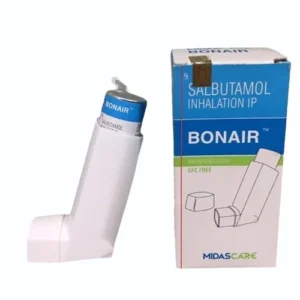
Albuterol Inhaler (Generic) (Bonair)
Active Ingredient: Salbutamol Indication: Asthma Manufacturer: MidasCare Pharma Packaging: 200 MDI in 1 Inhaler Delivery Time: 6 To 15 days Price range: $35.00 through $130.00Albuterol Inhaler (Generic) (Bonair)
Price range: $35.00 through $130.00 -
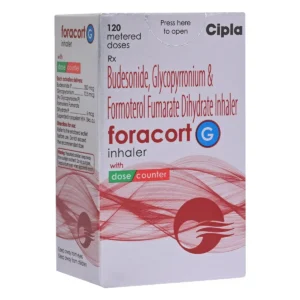
Foracort G Inhaler
Active Ingredient: Budesonide/Formoterol/Glycopyrrolate Indication: Asthma, Chronic obstructive pulmonary disorder (COPD) Manufacturer: Cipla Limited Packaging: 120 MDI in 1 Inhaler Delivery Time: 6 To 15 days Price range: $45.00 through $215.00Foracort G Inhaler
Price range: $45.00 through $215.00 -
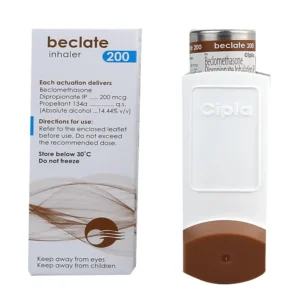
Beclate Inhaler 200 mcg (Beclometasone)
Active Ingredient: Beclometasone Indication: Severe allergic reactions, Allergy symptoms, Asthma Manufacturer: Cipla Limited Packaging: 200 MDI in 1 Inhaler Strength: 200mcg Delivery Time: 6 To 15 days Price range: $21.00 through $50.00Beclate Inhaler 200 mcg (Beclometasone)
Price range: $21.00 through $50.00 -
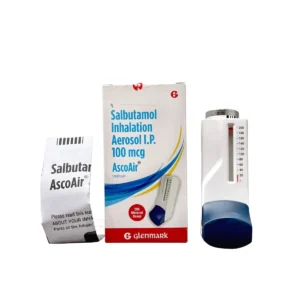
Asco Air Inhaler
Active Ingredient: Salbutamol Indication: Asthma Manufacturer: Glenamrk Packaging: 200 MDI in 1 Inhaler Strength: 100mcg Delivery Time: 6 To 15 days Price range: $35.00 through $130.00Asco Air Inhaler
Price range: $35.00 through $130.00 -
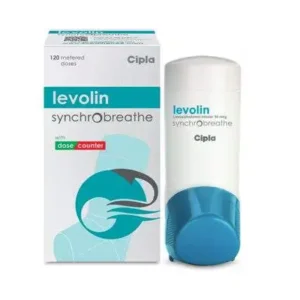
Levosalbutamol synchro breathe Inhaler (Generic)
Active Ingredient: Levosalbutamol Indication: Asthma, Chronic obstructive pulmonary disorder (COPD) Manufacturer: Cipla Limited Packaging: 200 MDI in 1 Inhaler Strength: 50mcg Delivery Time: 6 To 15 days Price range: $40.00 through $130.00Levosalbutamol synchro breathe Inhaler (Generic)
Price range: $40.00 through $130.00 -
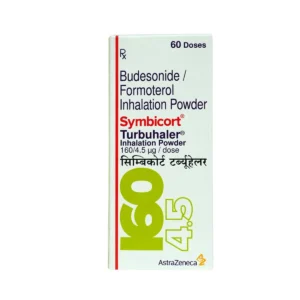
Symbicort Turbuhaler 160 Mcg (Budesonide/Formoterol)
Active Ingredient Budesonide/Formoterol Manufacturer AstraZeneca Pharma India Ltd Packaging 60 MDI in a Turbuhaler Strength 160 Mcg Delivery Time 6 To 15 days SKU: Symbicort Turbuhaler 160 Mcg (Budesonide/Formoterol) Price range: $20.00 through $105.00Symbicort Turbuhaler 160 Mcg (Budesonide/Formoterol)
Price range: $20.00 through $105.00 -
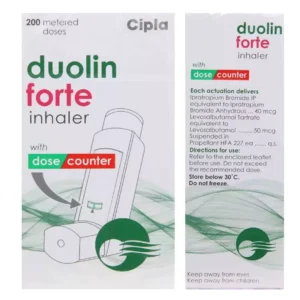
Duolin Forte Inhaler
Active Ingredient Levosalbutamol/Ipratropium Manufacturer Cipla Limited Packaging 200 MDI in 1 Inhaler Strength 90mcg Delivery Time 6 To 15 days SKU: Duolin Forte Inhaler Price range: $22.00 through $100.00Duolin Forte Inhaler
Price range: $22.00 through $100.00 -
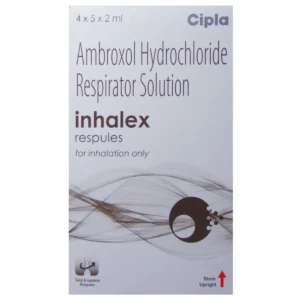
Inhalex Respules
Active Ingredient Ambroxol Hydrochloride Manufacturer Cipla Ltd Packaging 5 respules in 1 packet Strength 15 Mg Delivery Time 6 To 15 days SKU: Inhalex Respules Price range: $20.00 through $72.00Inhalex Respules
Price range: $20.00 through $72.00 -
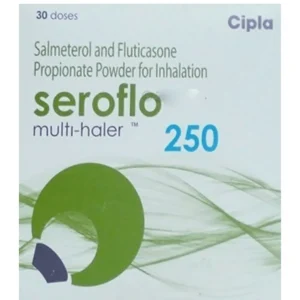
Seroflo Multihaler 250 (Salmeterol/Fluticasone)
Active Ingredient: Salmeterol/Fluticasone Indication: Asthma, Chronic obstructive pulmonary disorder (COPD) Manufacturer: Cipla Limited Packaging: 60 MDI in 1 Inhaler Strength: 250mcg Delivery Time: 6 To 15 days Price range: $20.00 through $85.00Seroflo Multihaler 250 (Salmeterol/Fluticasone)
Price range: $20.00 through $85.00 -
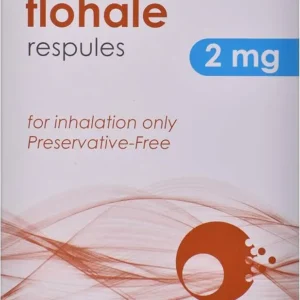
Flohale Respules (Fluticasone Propionate)
Active Ingredient Fluticasone Propionate Manufacturer Cipla Limited Packaging 5 respules in 1 packet Strength 0.5 mg/2 mg Delivery Time 6 To 15 days SKU: Flohale Price range: $45.00 through $181.00Flohale Respules (Fluticasone Propionate)
Price range: $45.00 through $181.00 -

Triohale Rotacaps (Tiotropium, Formoterol & Ciclesonide)
Active Ingredient Tiotropium/Formoterol/Ciclesonide Manufacturer Cipla Limited Packaging 15 Rotacaps in 1 packet Delivery Time 6 To 15 days SKU: Triohale Rotacaps (Tiotropium/Formoterol/Ciclesonide) Price range: $12.00 through $31.50Triohale Rotacaps (Tiotropium, Formoterol & Ciclesonide)
Price range: $12.00 through $31.50 -

Triohale Inhaler (Tiotropium,Formoterol & Ciclesonide)
Active Ingredient Tiotropium/Formoterol/Ciclesonide Manufacturer Cipla Limited Packaging 200 MDI in 1 Inhaler Delivery Time 6 To 15 days SKU: Triohale Inhaler (Tiotropium/Formoterol/Ciclesonide) Price range: $33.00 through $95.00Triohale Inhaler (Tiotropium,Formoterol & Ciclesonide)
Price range: $33.00 through $95.00